
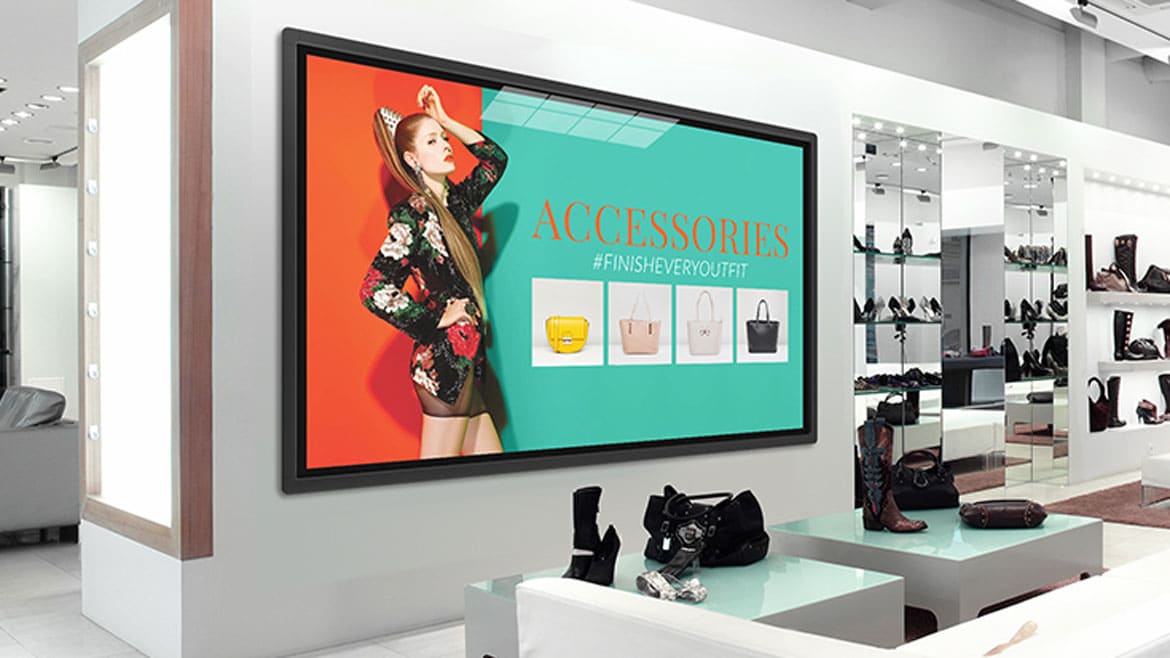
Commercial Digital Signage vs Consumer TVs – What’s the Real Difference for Businesses?
Introduction
When choosing a screen for your business, it’s tempting to opt for a low-cost consumer TV. With 4K resolution and well-known brands available at surprisingly low prices, it can seem like a smart way to save money.
However, while consumer TVs and commercial digital signage screens may look similar on paper, they are built for completely different purposes.
This comparison of commercial digital signage vs consumer TVs helps business owners choose the right screen for long-term performance and visibility.
In this guide, we explain the real differences – and why businesses across retail, hospitality, salons, and showrooms choose commercial displays for reliability, visibility, and long-term value.
The Key Differences at a Glance
|
Feature |
Consumer TV |
Commercial Digital Signage |
|
Brightness |
~250–300 cd/m² |
450+ cd/m² (higher available) |
|
Usage Rating |
4–6 hours/day |
16/7 or 24/7 operation |
|
Warranty |
Domestic use only |
Commercial use covered |
|
Orientation |
Landscape only |
Portrait & landscape |
|
Environment |
Clean home use |
Retail, hospitality, public spaces |
|
Lifespan |
Reduced under heavy use |
Built for continuous operation |
Built for Continuous Use (Not Just Evenings and Weekends)
Consumer TVs are designed for occasional use – typically a few hours per day in a home environment.
In contrast, most businesses require screens to run:
- 8–12 hours per day
- 7 days a week
- Often displaying static content
Running a domestic TV like this can lead to:
- Overheating
- Reduced lifespan
- Invalidated warranties
Commercial digital signage screens are specifically built for continuous operation, with components designed to handle long daily usage without performance issues.
Brightness and Visibility in Real Environments
A key difference is brightness.
- Consumer TVs: typically around 250–300 cd/m²
- Commercial displays: typically 450 cd/m² and above
This matters more than most people realise.
In real-world environments such as:
- Shopfront windows
- Bright retail spaces
- Restaurants with overhead lighting
Lower brightness screens quickly appear dull, washed out, or difficult to read.
Higher brightness ensures your content remains:
- Clear
- Vibrant
- Easy to read from a distance
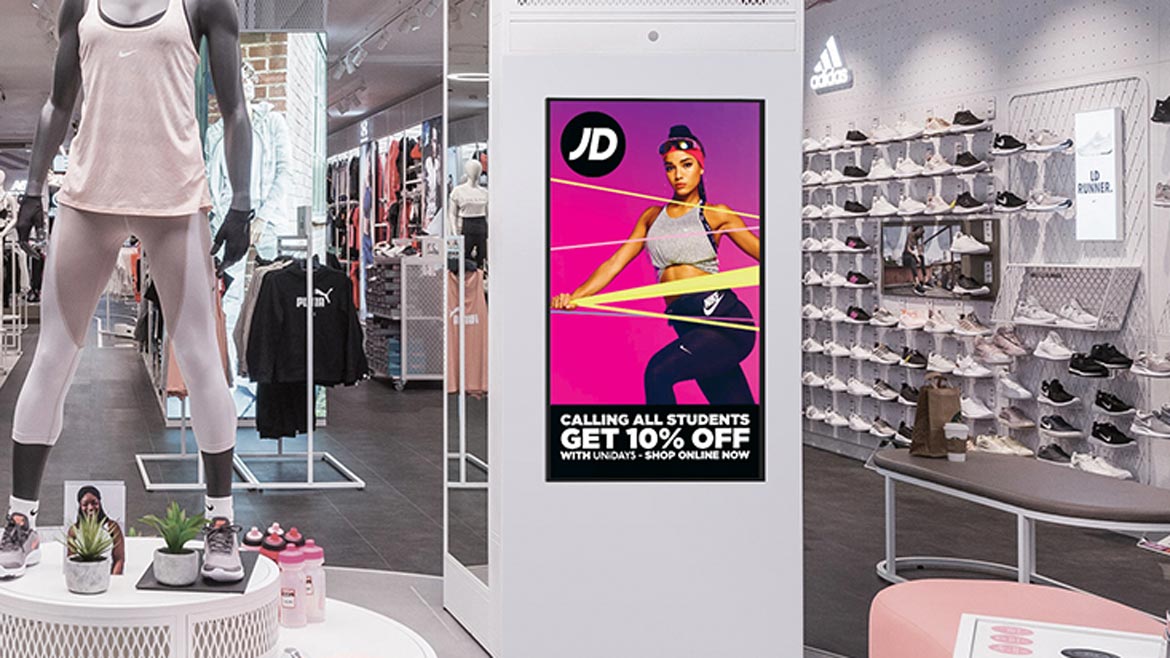
For businesses using window-facing screens, investing in high brightness digital displays can make a significant difference in visibility and impact.
Common Questions Businesses Ask Before Buying a Screen
Is a 4K TV good enough for digital signage?
While 4K resolution sounds impressive, resolution is rarely the issue in commercial environments. Brightness, durability, and usage rating are far more important for business use.
Why do commercial displays cost more than TVs?
Commercial screens are built with higher-grade components, designed for continuous operation, and include features specifically for business environments.
Can I leave a TV on all day in my shop?
You can, but most TVs are not designed for this level of usage. Running them for long hours daily can significantly shorten their lifespan.
What brightness do I need for a shop window screen?
Typically, at least 450 cd/m² is recommended for indoor spaces, with higher brightness required for window-facing displays.
Designed for Real Business Environments (Not Living Rooms)
Every industry presents different environmental challenges that consumer TVs are not designed for.
Takeaways & Restaurants
- Heat, steam, and airborne grease particles
- These can be drawn into TVs through rear ventilation
- Over time, this can affect internal components and reliability
- This is why purpose-built digital menu boards are recommended
Retail Stores (Clothing, High Street Shops)
- Dust and fibres from clothing
- Long opening hours
- Bright window exposure
Salons & Barbers
- Hair particles in the air
- Sprays, humidity, and continuous daily use
Gyms & Leisure Environments
- Extended operating hours
- Heat and humidity fluctuations
Commercial digital signage displays are built with:
- More robust enclosures
- Better thermal management
- Components designed for these conditions
Portrait vs Landscape – Flexibility That TVs Don’t Offer
Consumer TVs are designed for landscape use only.
Mounting them vertically can:
- Affect cooling performance
- Cause uneven panel wear
- Risk long-term damage
Commercial displays are designed for both orientations, giving you flexibility for:
- Digital menu boards
- Portrait advertising displays
- Window-facing promotions
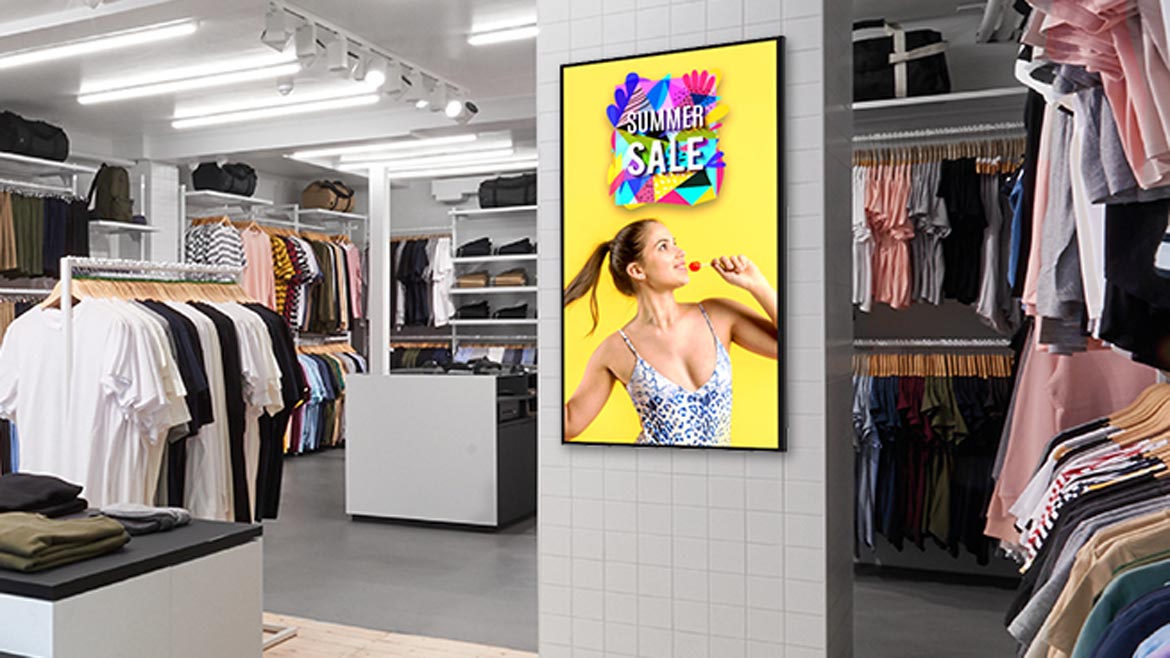
Image Retention and Static Content
Many businesses display:
- Menus
- Price lists
- Promotions
- Brand logos
This often involves static or slow-moving content.
Consumer TVs are more prone to:
- Image retention
- Uneven screen wear
Commercial displays are designed to handle static content for extended periods, reducing these risks.
Commercial Features That TVs Don’t Have
Professional displays include features designed specifically for business use:
- Scheduled on/off timers
- Automatic content looping
- Remote management options
- Commercial-grade connectivity
These features allow for:
- Consistent operation
- Reduced manual intervention
- Scalable screen management
Warranty and Reliability
This is often overlooked.
Most consumer TV warranties:
- Only cover domestic use
- May be void if used in a business environment
Commercial displays:
- Include warranties designed for business use
- Offer greater reliability under continuous operation
This reduces the risk of:
- Unexpected replacement costs
- Downtime
- Lost sales opportunities
“Why Not Just Buy a £200–£300 TV?”
It’s a fair question – and one many business owners ask.
If the screen is only being used occasionally, a consumer TV may be suitable.
However, in most business environments where screens are used daily, the lower upfront cost often leads to:
- Shorter lifespan
- Reduced visibility in bright environments
- Higher replacement frequency
A commercial display is designed to perform consistently over time, making it a more cost-effective investment in the long run.
The Bottom Line
While consumer TVs may seem like a cost-saving option initially, they are not built for the demands of a commercial environment.
Commercial digital signage screens offer:
- Higher brightness
- Longer lifespan
- Greater reliability
- Flexibility in installation
- Features designed for business use
Choosing between a commercial digital signage display and a consumer TV is not just about price – it’s about performance, lifespan, and suitability for business use.
Looking for the Right Digital Signage Solution?
At W&Co, we supply a wide range of commercial digital signage displays designed for real business environments.
Whether you need:
- Digital menu boards
- Window displays
- Retail signage
- High brightness screens
You can explore our range of budget digital display screens or speak to our team for expert advice tailored to your business.
Frequently Asked Questions
Can I use a TV for digital signage in my business?
Yes, but most consumer TVs are not designed for continuous commercial use and may fail more quickly or lose warranty coverage.
What is the difference between a commercial display and a TV?
Commercial displays are brighter, built for longer operating hours, and designed for business environments such as retail stores, restaurants, and public spaces.
How long will a consumer TV last in a business?
This depends on usage, but running a TV for 10–12 hours per day can significantly reduce its lifespan compared to normal home use.
Are commercial digital signage screens worth the extra cost?
Yes – they provide better visibility, longer lifespan, and improved reliability, making them more cost-effective over time.
Can commercial screens be used in shop windows?
Yes – many are specifically designed for high-brightness environments such as storefronts and window displays.