
What Size Digital Signage Screen Is Right for Your Space?
Choosing a digital signage screen can be confusing if you do not already know the exact size you need. Many customers start with a rough space measurement, a paper size in mind, or simply an idea such as “something large enough for a shop window”. That is completely normal.
You do not need to know whether you need a 32-inch, 43-inch, 50-inch or 55-inch screen before contacting us. If you can provide an approximate width and height for the space available, W&Co can help recommend suitable digital signage screen sizes for your business.
What Size Digital Screen Do I Need?
Quick answer: measure the space first, then match it to a suitable commercial screen size. For many business displays, the most common sizes are 32-inch, 43-inch, 50-inch and 55-inch. The best place to start is with the space you have available, not the screen size itself. For example, if your window, wall or display area is roughly 1,000mm wide by 800mm high, we can compare that space with common commercial screen sizes and suggest the closest suitable options.
As a simple guide, 32-inch screens work well for compact spaces or close-up viewing. 43-inch screens give a useful poster-style display, while 50-inch and 55-inch screens usually create stronger impact in shop windows, salons, receptions, estate agents and other customer-facing areas.
Common digital signage screen sizes compared
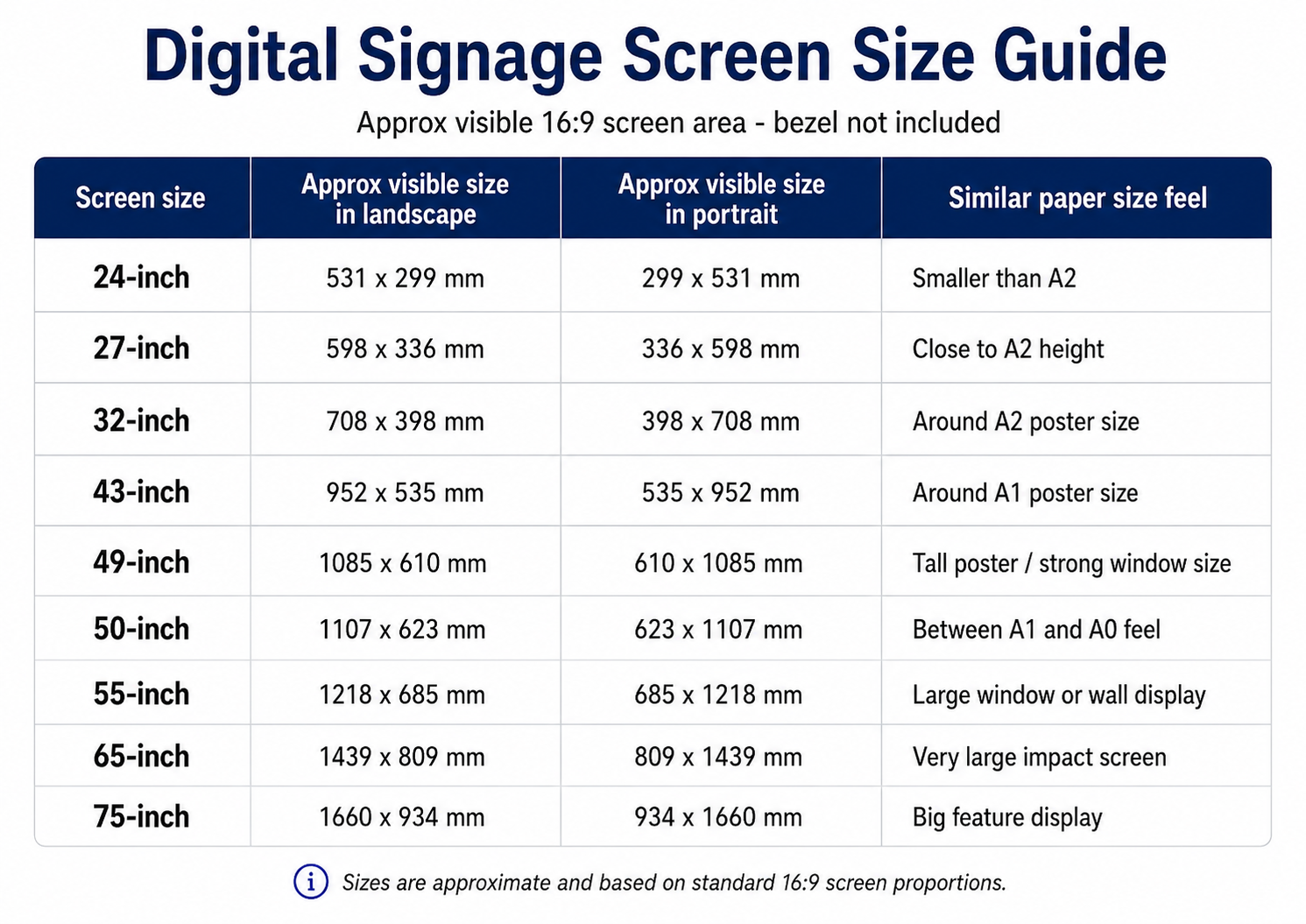
These sizes are approximate and based on standard 16:9 screen proportions. The final external size may vary slightly depending on the exact screen model, bezel and mounting option.
Choosing a Digital Signage Screen by Poster Size
If you are used to working with printed posters, it can help to compare digital screen sizes with familiar A-series paper sizes. For reference, standard A-series paper sizes such as A2, A1 and A0 are widely used for posters and printed display graphics.
- A2 poster: 420 x 594mm – closest digital screen feel is usually 27-inch or 32-inch portrait.
- A1 poster: 594 x 841mm – closest digital screen feel is usually 43-inch portrait.
- A0 poster: 841 x 1189mm – closest digital screen feel is usually 50-inch or 55-inch portrait.
Digital signage screens are usually widescreen, so the proportions are not exactly the same as printed paper sizes. However, these comparisons are useful when trying to judge the overall visual impact.
What Size Digital Signage Screen Is Best for Your Location?
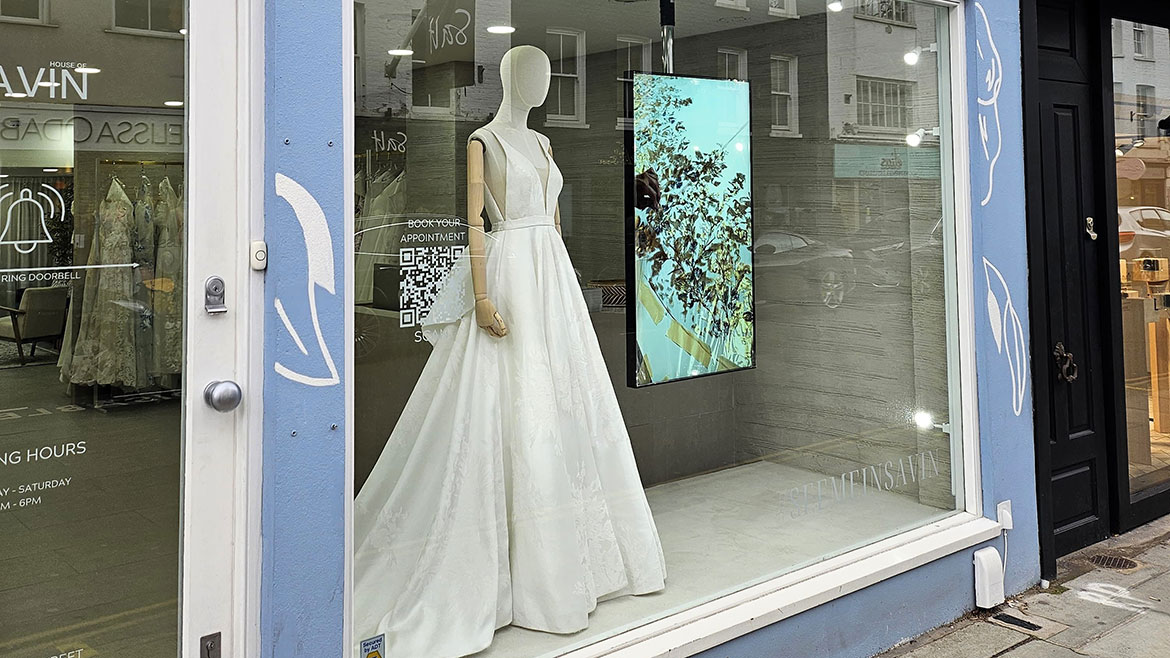
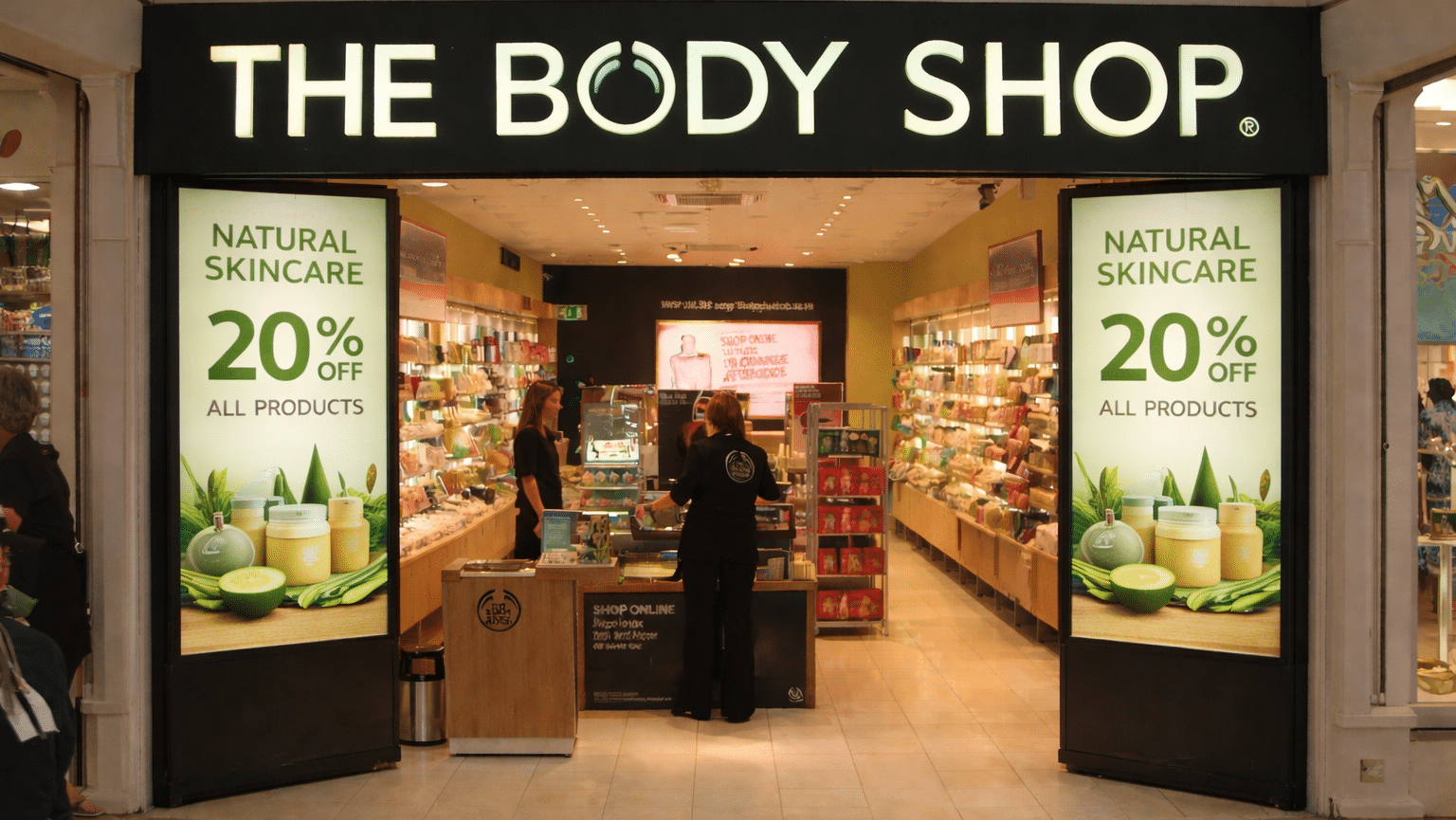
For shop windows, salons, beauty clinics, estate agents, reception areas, offices, menu boards and retail displays, the right screen size depends on the space available, the viewing distance and the type of content you want to show. A 32-inch screen can work well in a smaller area or where customers are viewing the display close up.
For stronger visual impact, 43-inch, 50-inch and 55-inch screens are often more effective. A 43-inch screen gives a neat poster-style display, while 50-inch and 55-inch screens create a larger, more eye-catching display for walls, windows, reception areas and customer-facing spaces.
Should My Digital Signage Screen Be Portrait or Landscape?
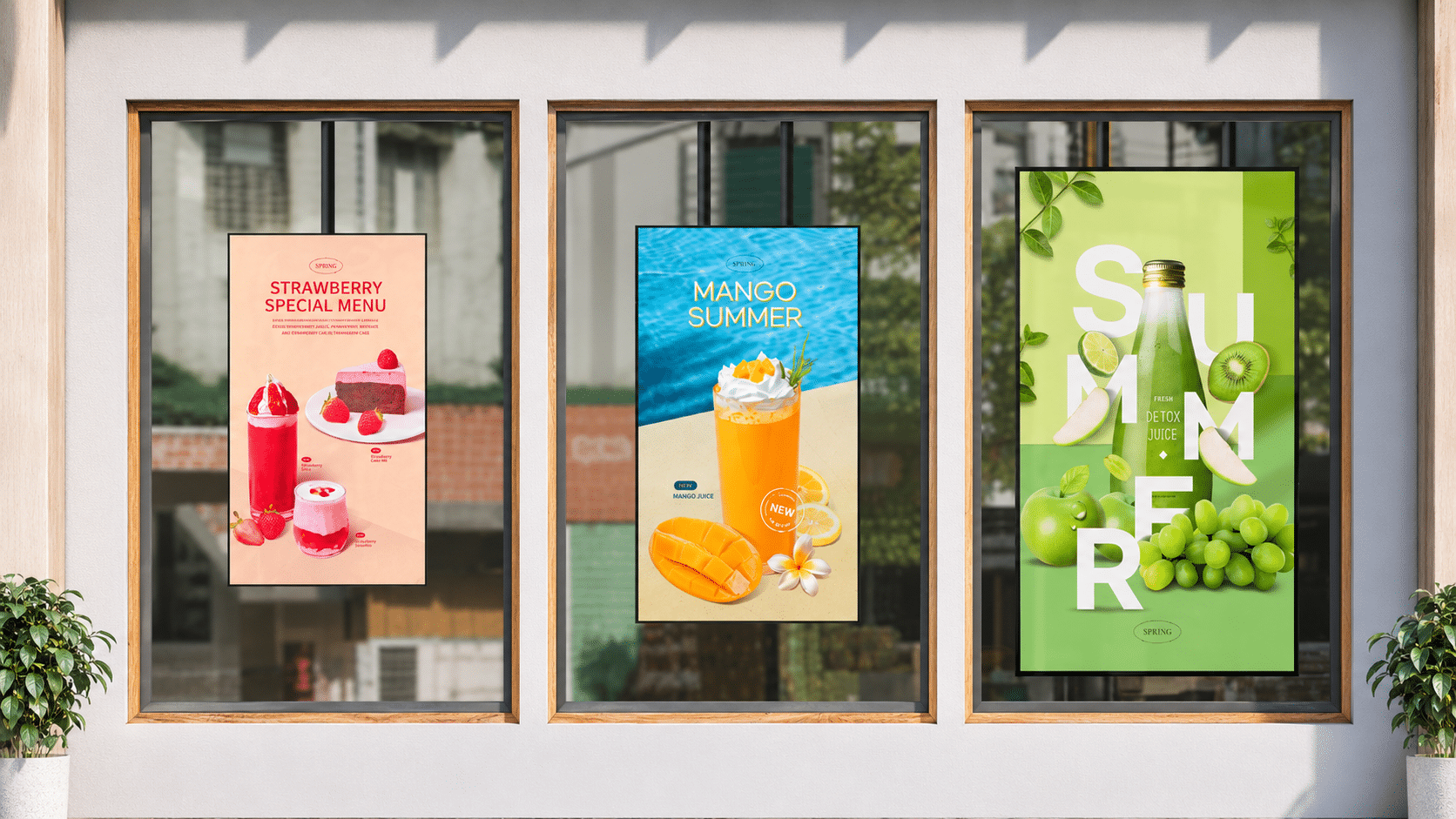
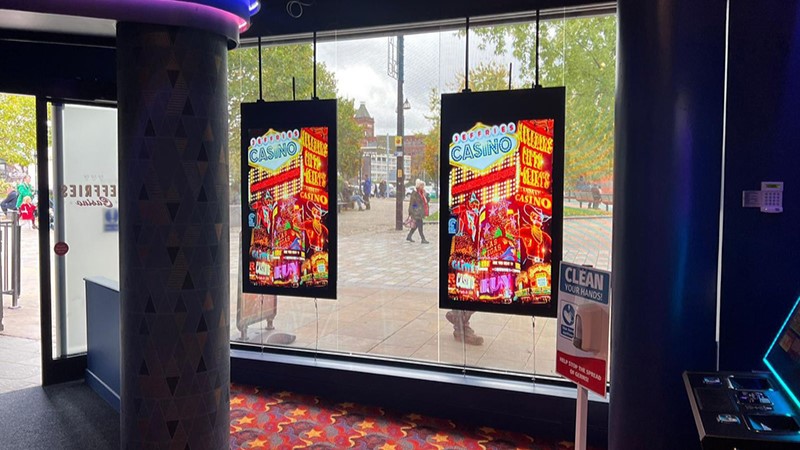
Portrait screens are usually best for poster-style advertising, special offers, menus, salon promotions, treatment lists, estate agent listings and window displays. They feel similar to a printed poster and are often easier to position in narrow shopfront spaces.
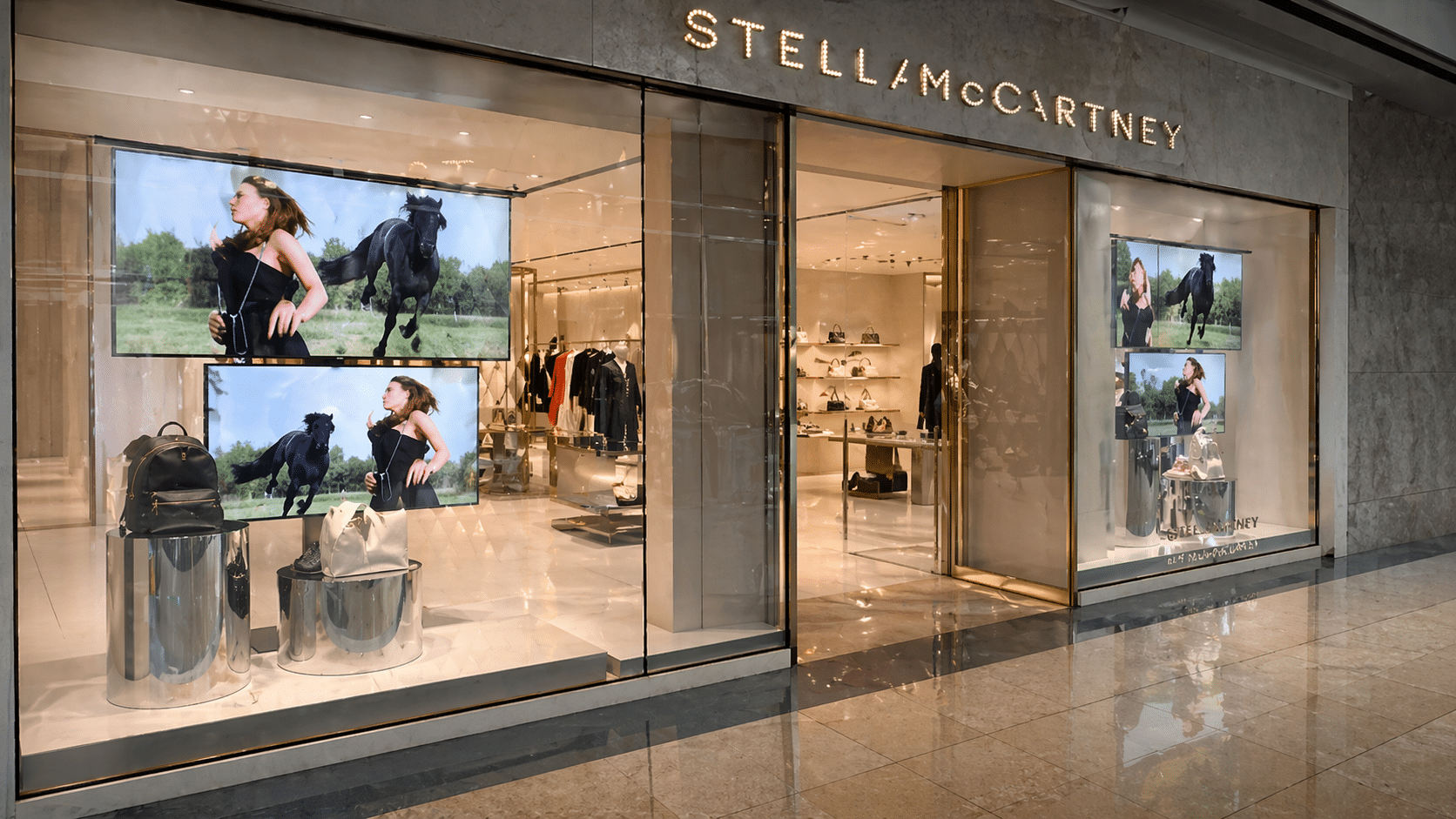
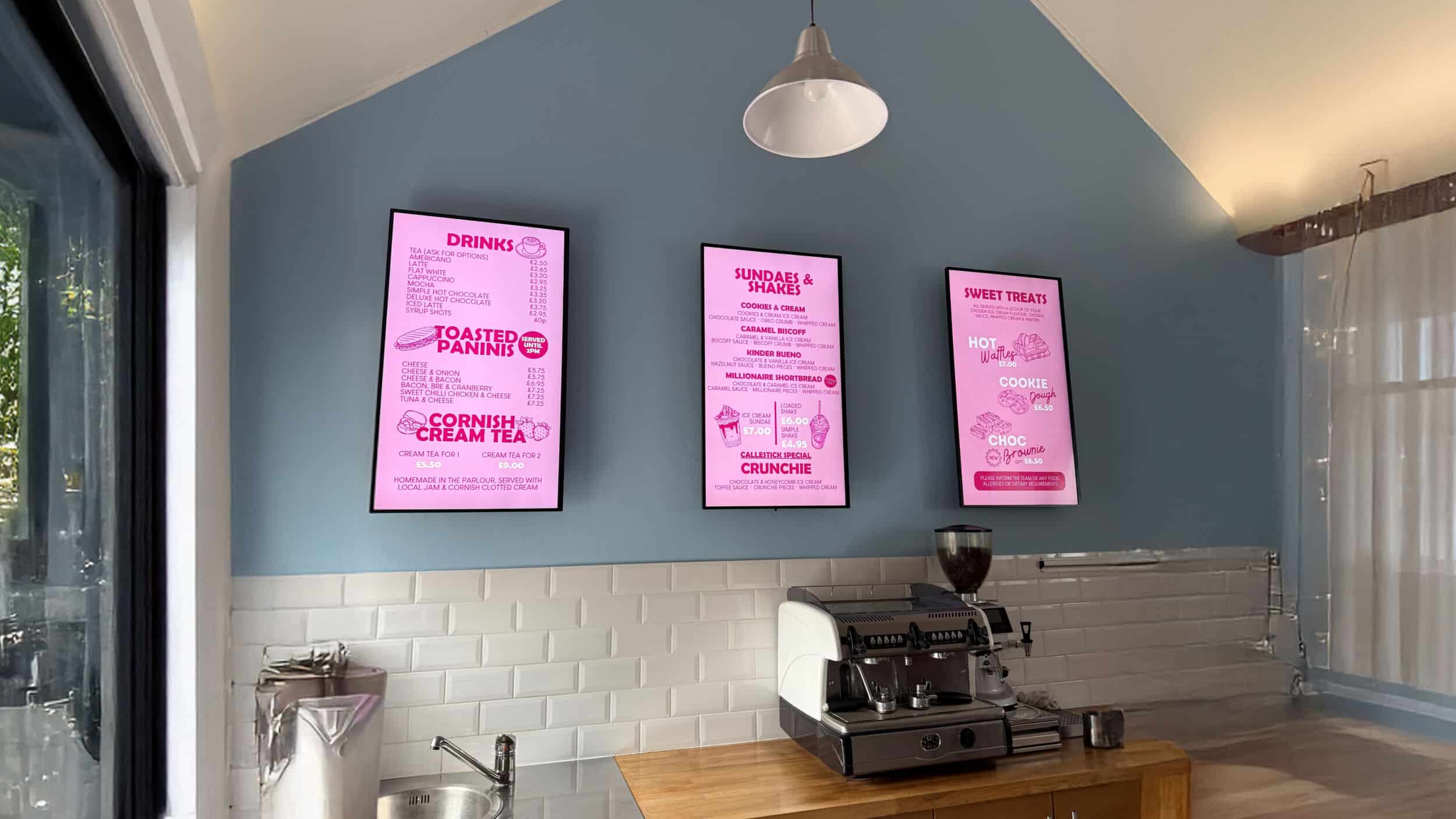
Landscape screens are better for video content, wide images, reception areas, waiting rooms, menu boards, presentations and general information screens. They are also useful when several screens are placed side by side to create a wider digital menu or promotional display.
Choosing the Right Screen Type Matters Too
Screen size is only one part of choosing the right display. The screen also needs to suit the environment where it will be used. For example, a screen in a bright shop window may need higher brightness, while a screen in a restaurant, takeaway or café may need to cope with long opening hours and a busier commercial environment.
For bright shop windows, we usually recommend high brightness digital signage, designed to stay visible in brighter conditions and attract attention from outside. For other indoor areas, we can recommend suitable commercial digital signage screens based on where the screen will be positioned and how it will be used.
Not sure what size you need? Send us an approximate measurement of the space available and we can recommend suitable digital signage screen sizes for your shop, salon, office or business.
Choosing Screen Size FAQs
What are the most popular digital signage screen sizes?
The most popular digital signage screen sizes for business use are usually 32-inch, 43-inch, 50-inch and 55-inch. Smaller screens work well for close-up viewing, while 43-inch, 50-inch and 55-inch screens are better for stronger visual impact in shops, salons, offices, receptions, showrooms and menu board displays.
What size digital screen is closest to A2?
A 32-inch portrait screen gives a similar poster-style feel to A2, although the proportions are different because most digital signage screens are widescreen. A2 is 420 x 594mm, while a 32-inch portrait screen is approximately 398 x 708mm.
What size digital screen is closest to A1?
A 43-inch portrait screen is usually the closest popular digital signage size to an A1 poster. A1 is 594 x 841mm, while a 43-inch portrait screen is approximately 535 x 952mm, so it gives a similar poster-style feel with extra height.
What size digital screen is closest to A0?
A 50-inch or 55-inch portrait screen is usually the closest option to an A0 poster. A0 is 841 x 1189mm, while a 50-inch portrait screen is approximately 623 x 1107mm and a 55-inch portrait screen is approximately 685 x 1218mm.
What size screen should I choose for a wall display?
For smaller wall displays, 32-inch or 43-inch screens can work well. For stronger impact in larger spaces, reception areas, showrooms or customer-facing walls, 50-inch and 55-inch screens are usually more effective.
What size screen is best for digital menu boards?
For digital menu boards, the best size depends on the viewing distance and the amount of menu content. Many businesses use 43-inch, 50-inch or 55-inch landscape screens, often placed side by side to create a clear menu board display.
Do I need to know the exact screen size before asking for a quote?
No. If you can provide approximate space measurements, W&Co can suggest suitable digital signage screen sizes.
Should my screen be portrait or landscape?
Portrait is usually best for poster-style advertising, offers, treatment lists, estate agent listings, reception notices and window displays. Landscape is better for video, digital menu boards, wide graphics, presentations and general information screens.
Can I use a normal TV instead of a commercial digital signage screen?
A normal TV is not usually suitable for commercial digital signage use. Consumer TVs are designed for home viewing, not long daily operating hours in shops, restaurants, salons, offices or public areas.
Commercial digital signage screens are designed for business use, with better durability, more suitable ventilation and features such as scheduled operation, portrait or landscape mounting, higher brightness options and longer daily running times. In environments such as restaurants, takeaways and cafés, airborne grease, food particles and dust can also affect equipment, so using the right commercial screen is important.