
Choosing the Right Screen Brightness for Indoor, Shop Window and Outdoor Digital Signage
How bright should digital signage be? There is no single brightness level that is right for every screen. A display that looks perfectly bright inside an office may become difficult to see in a shop window. A screen behind glass may have to compete with reflections as well as daylight, while an outdoor display needs to remain readable in changing weather and sunlight throughout the day.
As a broad guide, normal indoor commercial digital signage can often work well at around 350–500 cd/m². Brighter interiors and less exposed window-facing applications may benefit from approximately 700–1,500 cd/m², while screens positioned in strong daylight or direct sunlight may require specialist displays around 2,500–4,000 cd/m².
These are only starting points, not fixed cut-offs.
The direction the screen faces, whether sunlight falls directly onto it, reflections from glass, ambient lighting, haze and anti-reflection treatments, temperature control and automatic brightness adjustment can all affect how clearly a digital screen can actually be seen.
Digital Signage Brightness: A Quick Guide
As a practical starting point:
- 350–500 cd/m² is often suitable for normal indoor commercial environments such as offices, meeting rooms, restaurants, reception areas and shops away from strong daylight.
- 500–1,000 cd/m² can be useful in brightly lit retail spaces, shopping centres, showrooms and glazed interiors.
- Around 700–1,500 cd/m² may work well in some shaded or north-facing window applications, depending on reflections and the amount of daylight reaching the screen.
- 2,500–4,000 cd/m² is more appropriate for demanding shop windows, strong daylight, direct sunlight and outdoor digital signage.
- High-haze, anti-glare and low-reflection technology can improve perceived visibility without simply increasing the brightness figure.
The correct choice should therefore be based on the actual location rather than simply selecting the screen with the highest cd/m² specification.
What Does cd/m² Mean?
Digital display brightness is normally measured in candelas per square metre, written as cd/m².
You may also see brightness described in nits. For display specifications, 1 nit is equivalent to 1 cd/m².
A higher figure means the display is capable of producing more light. That is useful when a screen has to compete with daylight, but more brightness is not automatically better in every situation.
A very bright screen inside a relatively dark room may be uncomfortable to view, consume more energy and generate unnecessary heat.
The aim is therefore to use enough brightness for the environment rather than simply specifying the maximum possible output.
How Bright Should Indoor Digital Signage Be?
For most normal indoor commercial environments, approximately 350–500 cd/m² can be perfectly adequate.
Typical Applications Include:
- Offices
- Meeting rooms
- Reception areas
- Restaurants
- Cafés
- Retail interiors
- Corporate communications
- Digital menu boards
The amount of ambient light is important.
A 500 cd/m² screen positioned well inside a building has a much easier job than the same screen installed next to a large glazed entrance with daylight falling directly across it.
Bright retail interiors, shopping centres, showrooms and other heavily illuminated environments can therefore benefit from increased brightness.
For locations that need more brightness than a standard indoor commercial screen, view our high brightness digital signage range, which includes enhanced-brightness, high-haze and ultra-high-brightness display options.
Our High Vibrance Digital Displays are an example of this type of screen, combining enhanced brightness with an anti-glare haze surface to improve visibility in bright indoor commercial environments.
Brightness Is Not the Whole Story
One of the most important things to understand about digital signage is that the brightest screen does not automatically provide the clearest image.
Reflections can be just as important as brightness.
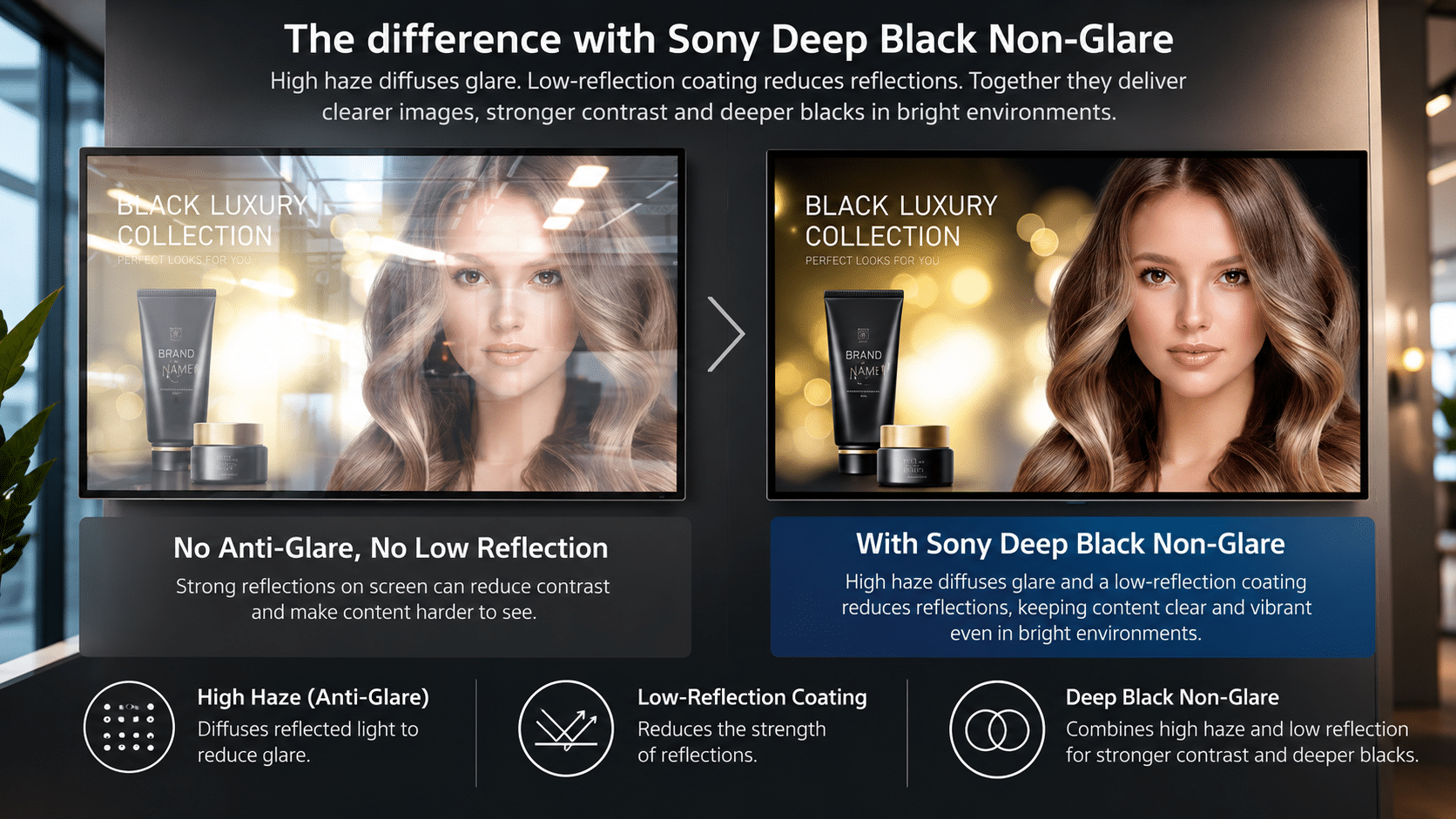
Overhead lighting, windows, glass shopfronts and other bright surfaces can reflect light back towards the viewer. This lowers perceived contrast and can make dark areas of an image appear grey or washed out.
There are several ways screen manufacturers deal with this.
High Haze and Anti-Glare Screens
A high-haze screen surface diffuses reflected light, helping to reduce sharp reflections and glare.
Low-Reflection Coatings
Low-reflection coatings reduce the amount of reflected light visible on the screen surface.
Anti-Reflective Glass
Outdoor and high-brightness displays can also use specialist anti-reflective protective glass to help maintain visibility in bright environments.
This is why two displays with similar brightness figures may perform very differently in the same location.
Sony High Haze Digital Displays: A Different Approach
Our Sony High Haze Digital Displays are a good example of why brightness alone does not tell the full story.
Rather than relying purely on very high light output, the range combines professional display brightness with Sony’s Deep Black Non-Glare technology, using high haze together with a low-reflection coating.
This reduces distracting reflections and helps maintain stronger contrast and deeper blacks in bright environments.
The Sony range operates at approximately 650–780 cd/m² depending on screen size, yet its reflection control can make the image appear clearer than a conventional screen that is producing more light but suffering from strong glare.
This does not mean that a 700 cd/m² high-haze display should replace a 3,500 or 4,000 cd/m² sunlight-readable screen in a strongly sunlit shop window.
They are solving different problems.
The important point is that reflections, glare and ambient light should be considered alongside brightness.
How Bright Should a Shop Window Digital Screen Be?
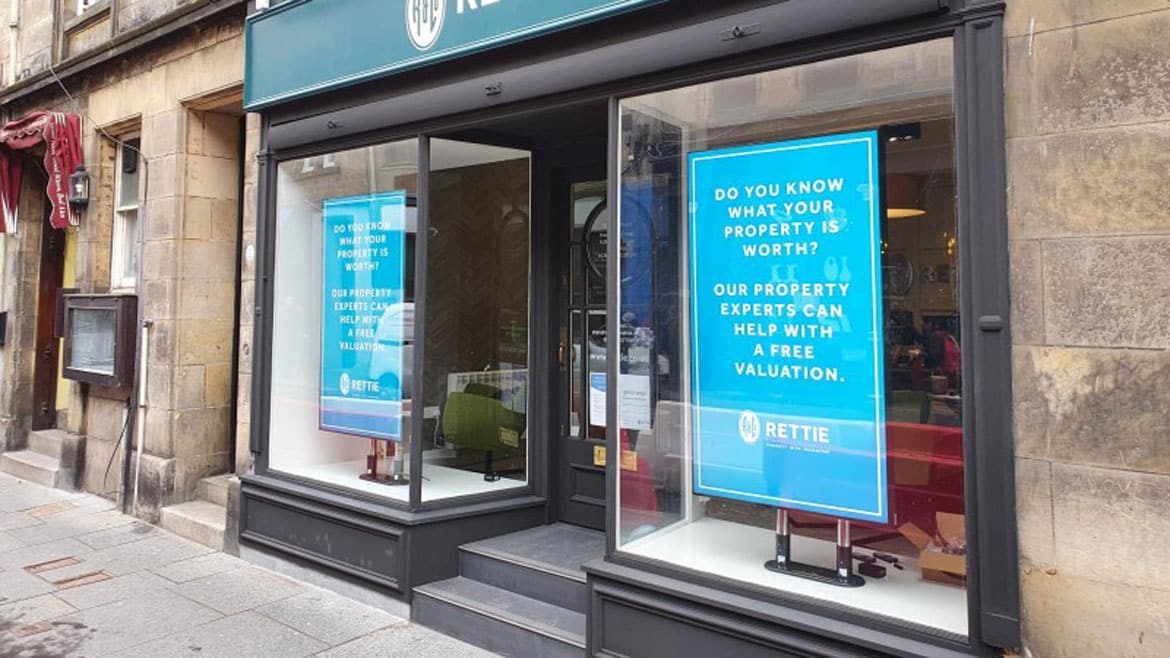
Shop windows are one of the most demanding environments for digital signage because the display is viewed through glass.
A screen may have to compete with:
- Daylight
- Reflections from buildings and traffic
- Overhead shop lighting
- The reflection of the street itself
- Direct sunlight
- Changing light levels throughout the day
A shaded or north-facing shop window can be very different from a south-facing frontage that receives direct sunlight for several hours.
For less exposed locations, a screen around 700–1,500 cd/m² may provide good visibility, particularly where effective haze or anti-glare technology is also being used.
Where a display is exposed to strong or direct sunlight, a purpose-built ultra-high-brightness digital window display is normally a safer choice.
Ultra-High-Brightness Window Displays
W&Co supplies specialist digital window screens designed specifically for bright shopfront environments.
Our Luma Ultra High Brightness Digital Screens provide 3,500 cd/m² brightness and include an ambient light sensor, smart temperature control and resistance to panel blackening.
Our LG Ultra High Brightness Screens provide up to 4,000 cd/m², making them suitable for demanding window-facing installations where strong daylight and direct sunlight are major considerations.
These displays are designed not only to produce more light but also to deal with the additional heat generated when sunlight passes through glazing.
That is why features such as thermal management, blackening resistance and ambient light sensors can be just as important as the headline brightness figure.
Does the Direction of a Shop Window Matter?
Yes. The direction a window faces can have a significant effect on the amount of sunlight reaching a digital display.
In the UK, a south-facing frontage will generally receive more direct sunlight than a shaded or north-facing window, although surrounding buildings, trees, canopies, window tinting and seasonal changes can all affect the actual conditions.
Where possible, a proposed screen location should be assessed during the brightest part of the day.
A screen that looks exceptionally bright during an installation carried out on an overcast morning may behave very differently when direct afternoon sunlight reaches the glass.
Why Are Ambient Light Sensors Useful?
Lighting conditions rarely stay the same throughout the day. An ambient light sensor detects the surrounding light level and allows compatible digital displays to adjust their brightness automatically.
During bright daylight, the screen can increase its output to maintain visibility.
As the surrounding light reduces, the screen can lower its brightness.
This can:
- Improve viewing comfort
- Reduce unnecessary energy consumption
- Reduce heat generation
- Avoid a display appearing excessively bright after dark
- Help maintain a more consistent viewing experience
Ambient light sensors are particularly valuable on outdoor displays and ultra-high-brightness window screens.
How Bright Should Outdoor Digital Signage Be?
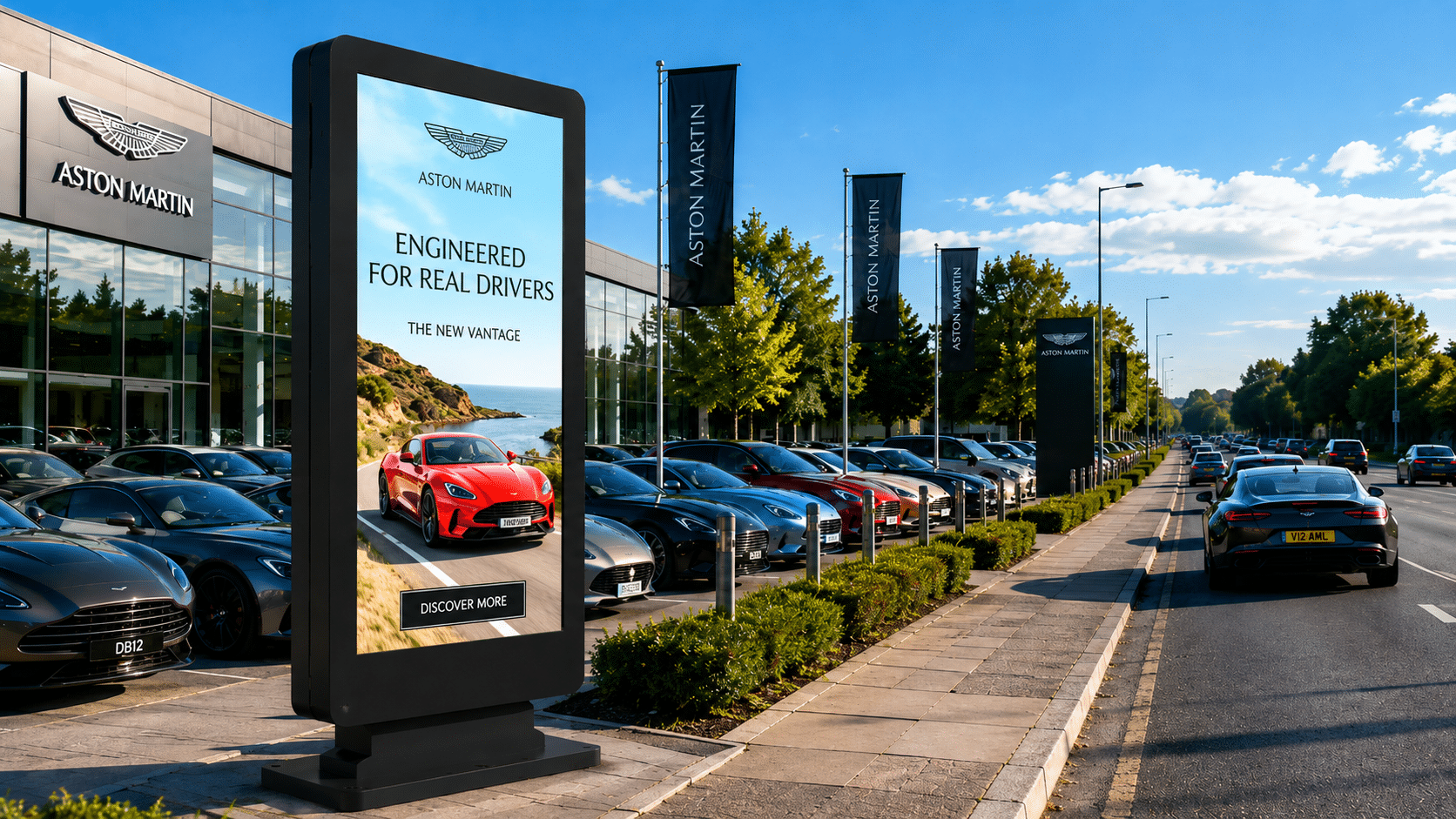
Outdoor digital signage has an additional challenge: the screen must remain visible in daylight while also being engineered to withstand the outdoor environment.
W&Co offers different outdoor brightness levels depending on the application.
Our Aura Outdoor Digital Screens use a 2,500 cd/m² sunlight-readable panel together with anti-reflective glass, dynamic brightness control, temperature management and an IP65 weather-resistant enclosure.
For applications requiring greater brightness, our Elite Outdoor Digital Screens provide 3,500 cd/m² ultra-high brightness together with anti-reflective glass and robust protection for demanding external installations.
Outdoor digital signage selection therefore involves much more than the brightness figure alone.
Other considerations include:
- IP weather protection
- Temperature management
- Vandal resistance
- Protective glass
- Servicing access
- Orientation
- Installation method
- Operating temperature
- Ambient brightness control
Is a Brighter Digital Screen Always Better?
No. More brightness is useful when the screen genuinely needs to compete with high ambient light or direct sunlight. But specifying an ultra-high-brightness screen for an ordinary office or indoor reception would normally add cost, power consumption and heat without providing a useful benefit.
Equally, choosing a standard indoor screen simply because it appears bright enough indoors can cause problems when the finished installation is positioned close to glazing or exposed to sunlight.
The best solution balances:
- Screen brightness
- Ambient light
- Reflections
- Haze and anti-glare performance
- Direct sunlight
- Temperature
- Operating hours
- Energy use
- Viewing distance
- The surrounding environment
How Do I Choose the Right Digital Signage Brightness?
Before choosing a digital display, consider the actual conditions where it will be installed.
Ask:
- Is the screen indoors or outdoors?
- Will it be positioned behind glass?
- Which direction does the window face?
- Does direct sunlight reach the screen?
- At what time of day is the location brightest?
- Are there strong reflections from windows or overhead lighting?
- Does the screen need to remain visible both during daylight and after dark?
- Would high-haze, anti-glare or low-reflection technology improve visibility?
- Does the screen require an ambient light sensor or specialist temperature management?
Answering these questions usually gives a much more useful specification than simply asking for the brightest screen available.
Digital Signage Brightness FAQs
What brightness is best for indoor digital signage?
For many normal indoor commercial environments, approximately 350–500 cd/m² is sufficient. Bright retail spaces, shopping centres, showrooms and locations close to glazing may benefit from higher-brightness displays.
Is 700 or 800 cd/m² bright enough for a shop window?
It can be suitable for some shaded, north-facing or less exposed window installations, particularly where the screen also uses effective haze or anti-glare technology.
For windows exposed to strong direct sunlight, a specialist ultra-high-brightness display is normally more suitable.
How bright should a screen be for direct sunlight?
For demanding direct-sunlight applications, purpose-built displays in the region of 2,500–4,000 cd/m² are commonly used within W&Co’s window and outdoor ranges.
The correct screen also needs appropriate temperature management and other features for the installation environment.
What brightness is best for outdoor digital signage?
There is no single figure for every outdoor installation.
W&Co’s outdoor LCD ranges include options from around 2,500 cd/m² to 3,500 cd/m², depending on the product and application.
Outdoor displays must also be suitably weatherproof and designed for changing temperatures and external conditions.
Are nits and cd/m² the same?
Yes. For display brightness specifications, 1 nit is equivalent to 1 candela per square metre, or 1 cd/m².
Does anti-glare technology mean I need less brightness?
Anti-glare, high-haze and low-reflection technologies can improve perceived screen visibility by reducing reflected light.
This means that raw brightness is not the only factor determining how clear a screen looks.
However, a screen exposed to strong direct sunlight will still need sufficient brightness for the environment.
What does an ambient light sensor do?
An ambient light sensor measures surrounding light levels and allows compatible displays to adjust their brightness automatically.
This helps maintain visibility during bright periods while reducing unnecessary brightness, energy use and heat when the surrounding light level falls.
Need Help Choosing the Right Digital Screen?
There is no single brightness level that works for every digital signage installation. A screen used in a meeting room, a display positioned inside a shop window and a permanent outdoor screen all face very different conditions.
W&Co supplies commercial digital signage ranging from standard indoor displays and high-haze screens through to ultra-high-brightness shop window displays and fully weather-resistant outdoor digital signage.
If you are unsure which brightness level you need, we can look at the location, whether the screen is behind glass, which direction it faces, the amount of direct sunlight and the likely reflections before recommending the most suitable option.
If you are also unsure what physical screen size you need, read our guide: What Size Digital Signage Screen Do I Need?
Contact W&Co Displays & Signs for advice, pricing or a quotation for your digital signage project.